
Bingo remains one of the most welcoming real-money games in any online casino lobby, and it fits perfectly into the fast, mobile-first style of play that many Asian iGaming players prefer today.
It keeps the familiar thrill of numbers being called and patterns to complete, but layers on smooth interfaces, auto-marking, and flexible stakes that work whether you are playing from Cagayan de Oro or anywhere else in the Philippines.
What Online Bingo Actually Is
Online bingo is the digital evolution of the classic hall game where you buy virtual cards, numbers are drawn by a random number generator (RNG), and you race other players to complete specific patterns. Depending on the room you enter, those patterns might be simple straight lines, creative shapes, or full cards, and each pattern has its own prize attached.
Most bingo platforms offer variants like 75‑ball and 90‑ball games, which mainly differ in grid size, pace, and pattern style. In 75‑ball bingo, you usually chase more creative patterns across a 5×5 grid, while 90‑ball bingo focuses on one line, two lines, and full house prizes, which feels more structured and traditional.
Behind the scenes, modern bingo rooms run on certified RNGs that ensure every draw is random and independent, so no player or operator can predict or influence the outcome. This is why choosing licensed bingo sites with publicly available testing certificates is so important, especially if you are playing with real money.
Online bingo also adds quality-of-life tools that physical halls cannot match, like auto-dab (automatic marking of called numbers) and clear visual cues when you are close to a win. These features let you enjoy bingo as both a focused game and a relaxing background activity while you chat, browse, or check other games between rounds.
How Bingo Works: Cards, Calls, and Patterns
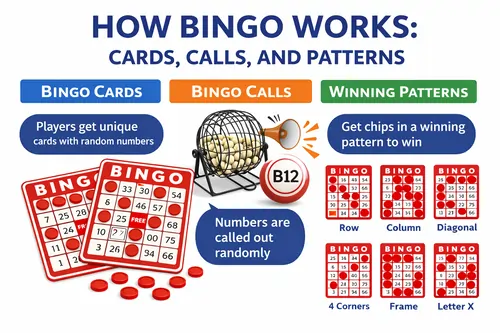
Every bingo session follows the same simple flow: you pick a room, buy cards, watch numbers get called, and hope one of your cards completes the winning pattern first. The interface is designed so that even new players can follow what is happening without prior experience.
When you buy a card, you receive a grid of numbers arranged according to the game type. In 75‑ball bingo, cards typically use a 5×5 grid with numbers spread across columns, while in 90‑ball bingo, cards use three rows and nine columns with pre-defined number ranges for each column.
As the round starts, the RNG draws numbers one by one, usually shown as animated balls or a highlighted call list on the screen. Each time a called number appears on your card, it is marked automatically if auto-dab is enabled, or you can tap/click to mark it yourself if you prefer manual control.
Common patterns include:
- Single line – A straight line of marked numbers across, down, or sometimes diagonally (depending on rules).
- Double line – Two completed lines on the same card for a higher payout.
- Full house – Every number on the card marked, often the top prize in 90‑ball rooms.
- Special patterns – Custom shapes, four corners, or themed designs that change from room to room.
For absolute beginners, it helps to see these patterns, not just read about them. A simple infographic showing a Single Line (one row highlighted), Double Line (two rows), and Full House (the entire card filled) can make these concepts instantly clear before you ever buy a real-money ticket. If your site supports it, placing small screenshots or pattern diagrams above the rules section will dramatically reduce confusion.
When a player can quickly recognize what a winning card looks like, they are less likely to feel lost when multiple cards are on-screen. Before your first game, it is worth scrolling through a pattern gallery or visual legend so you can spot Single Line versus Full House wins at a glance, even during fast-paced rounds.
Because each room can use different patterns, jackpots, and side rules, taking a moment to read the paytable and information panel before buying cards is always worth your time. Some platforms also highlight your “leading” cards and show how many numbers you are away from a win, which makes the tension much easier to follow when playing multiple cards.
How Bingo Compares to Other Number and Arcade Games
Bingo belongs to the same broad family as many other number-based and arcade-style games, which is why you often see them grouped together in casino lobbies. What sets bingo apart is its rhythm: instead of a single draw or instant resolution, you experience a build‑up of tension over a series of calls.
Here is a streamlined view of how bingo sits alongside other titles you might play in the same session:
| Game Type | Core Mechanic | Session Length |
|---|---|---|
| Bingo | Mark numbers as they are called, complete patterns | Medium, multiple calls per round |
| Mini Bingo | Faster, compressed bingo-style rounds | Short, rapid-fire |
| Keno | Pick numbers, wait for single draw | Short, one outcome per round |
| Lotto | Choose numbers for scheduled draws | Long, scheduled results |
| Number Game | Simple numeric range guesses | Very short |
| Lucky Ball | Ball-draw style lottery/arcade hybrid | Short to medium |
| Plinko | Drop ball through pegs, land in prize slots | Very short visual rounds |
| Peg Drop | Peg board drops with fixed odds | Very short |
| Drop Ball | Vertical drop into numbered slots | Very short |
| Crash Dice | Multiplier climbs, you cash out before it crashes | Very short, high tempo |
On Asian iGaming, bingo naturally sits at the center of this cluster. If you prefer a condensed version of the experience, Mini Bingo turns that multi‑call tension into rapid‑fire rounds that finish in a fraction of the time.
When you want a single-shot draw with similar number‑picking vibes, you can jump into Keno or the Number Game between bingo sessions. These games resolve quickly, making them ideal fillers when you have only a few spare minutes.
If you like the lottery aspect more than the room atmosphere, Lotto and Lucky Ball lean into bigger but rarer payouts, similar to traditional draws with scheduled results. And when you want visual, physics‑driven randomness, Plinko, Peg Drop, and Drop Ball offer quick, animated outcomes that still scratch that number-and-chance itch.
For pure adrenaline, Crash Dice takes you into a completely different tempo where multipliers climb and can drop without warning, giving you a much higher‑variance experience than standard bingo. Pairing these games with bingo lets you balance high‑risk moments with steadier, pattern‑based play.
How to Start Playing Online Bingo
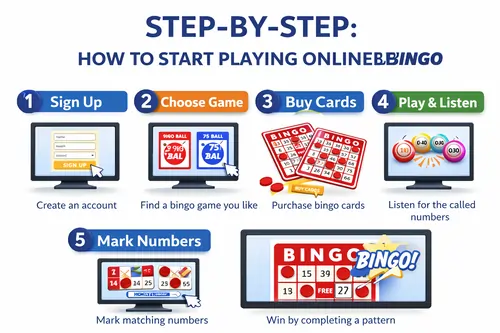
If you are transitioning from physical halls or completely new to bingo, getting started online is easier than it might look. Here is a step‑by‑step approach you can follow from anywhere, including the Philippines.
- Choose a licensed, reputable bingo site
Look for clear licensing information, responsible gambling tools, and third‑party testing certificates that confirm fair RNG use. In the Philippines, PAGCOR currently regulates a growing roster of online platforms, including well-known brands like BingoPlus, ArenaPlus, and GameZone, which are part of the larger DigiPlus ecosystem. These brands have been positioned as PAGCOR‑licensed offerings in the local market and are involved in initiatives that emphasize safer play and stronger player protection. - Create and verify your account
You usually provide basic information (name, email, date of birth) and confirm your email or phone number. In regulated markets, you may also need to complete KYC (Know Your Customer) verification with ID documents before withdrawals are allowed, which is standard practice to prevent fraud and underage access. - Deposit with limits in mind
After signing up, add funds using methods the site supports in your region, such as cards, e‑wallets, or localized banking routes. Setting deposit, loss, and session limits before you start is one of the easiest ways to keep bingo play firmly in the entertainment zone rather than letting it drift into something more serious than you intend. - Choose a bingo room that suits your style
Rooms are filtered by ticket price, game type (75‑ball, 90‑ball), and jackpot size. As a beginner, lower‑stake rooms with fewer players can make it easier to learn and slightly improve your chances of winning compared to high‑traffic jackpot rooms, simply because fewer cards are in play. - Buy your cards and check the pattern
Select how many cards you want to play and confirm the cost per card. Before the round starts, glance at the room info to see what pattern you need for a win and whether there are extra prizes like early five‑number patterns or progressive jackpots. This is a good place to reference any pattern infographic you have already viewed, so your mental picture matches the room’s rules. - Watch the draw and track your progress
Once the game begins, numbers are drawn and either auto‑marked or manually marked by you. Most modern clients highlight how many numbers you are away from a win, which cards are closest, and when you have achieved a pattern, making it easier to track even if you are playing several cards at once. - Collect your winnings automatically
Unlike traditional halls, you do not need to call out; the system automatically detects wins and credits your account. You can then stay for the next round, change rooms, or move to another game like Mini Bingo or Keno depending on your mood and remaining budget.
If you want more visual examples of each step, consider consulting external beginner-friendly guides that show screenshots of typical 75‑ball and 90‑ball tickets and winning cards. These will reinforce what you see in your chosen lobby and help you feel confident from your very first round.
Smart Bingo Tips: Playing Better Without Myths
While bingo is primarily a game of chance, you still have meaningful decisions to make about where and how you play. The most realistic strategies focus on room selection, card management, and attention rather than “systems” that claim to beat randomness.
Some practical, widely used tips include:
- Pick rooms with fewer players when possible
If there are fewer cards sold, each card you own represents a larger share of the total possibilities, which slightly improves your chances of landing a winning pattern. Smaller rooms also tend to feel more relaxed, which is helpful when you are still learning the ropes. - Start with a manageable number of cards
Playing more cards can improve your odds mathematically, but only if you can keep up with the pace and patterns. Many experienced players suggest beginning with two or three cards, then slowly increasing if the auto‑dab and interface feel comfortable. - Balance your cards instead of duplicating patterns
Some players prefer selecting cards with a mix of high/low and odd/even numbers to diversify outcomes instead of clustering around a narrow band of “lucky” digits. While no number spread can guarantee a win, avoiding highly similar cards can help you cover more of the number space in each round. - Stay focused during the draw
Focus remains a real edge, because missing calls or misreading patterns is the easiest way to lose a winnable game. Even with auto‑dab, staying engaged with your cards and the pattern you are chasing will make each round more satisfying and less confusing. - Use bonuses and free games with a plan
Many operators offer bingo bonuses, free cards, or loyalty rewards. Always check wagering requirements and eligible rooms so you do not waste bonuses on formats you do not enjoy or that are difficult to clear.
Above all, treat bingo as entertainment with a budget instead of a guaranteed income stream. If you ever feel your play is getting out of control, it is important to step back, use built‑in limit tools, and reach out to responsible-gambling support services if needed.
Making Bingo Work for You in the Philippines
From a GEO perspective, players across Asia—especially in the Philippines—tend to favor fast, mobile‑optimized experiences that work well on mid‑range devices and variable connections. This is where online bingo shines, because the game requires relatively light graphics and can run smoothly even on modest bandwidth when the software is optimized.
When choosing a platform from Cagayan de Oro or anywhere in Northern Mindanao, look for:
- Mobile‑friendly bingo lobbies that fit smaller screens without clutter.
- Local or regional payment options in addition to global cards and e‑wallets.
- Clear licensing information from PAGCOR or another recognized regulator, plus visible responsible-gambling links.
From an Answer Engine Optimization (AEO) and NLP angle, phrasing your searches thoughtfully helps you land on better, safer results. Instead of generic queries like “bingo online,” try “licensed online bingo Philippines real money,” “PAGCOR bingo sites mobile,” or “low stake 90‑ball bingo room PH.” Modern search and answer engines interpret intent and location, so including words like “Philippines,” “PAGCOR,” and “real money” helps filter out unlicensed or irrelevant options.
External educational resources that explain bingo rules and patterns can complement your chosen site’s help pages. When possible, look for articles and guides that embed pattern diagrams, screenshots of tickets, and walkthroughs of a full round, as these will match the visual learning style of many new players.
Where Bingo Fits in Your Overall Game Session
In a modern arcade‑style lobby, bingo is rarely the only game you play, and that is part of its strength. Its mid‑tempo rhythm and moderate volatility make it a natural “hub” game around which you can build an entire session.
You might:
- Treat bingo as your steady anchor, then jump into Mini Bingo when you want a faster version of the same idea.
- Use Keno and Number Game for quick, one‑draw bursts between longer bingo rounds.
- Reserve Lotto and Lucky Ball for times when you want lottery‑style excitement with bigger but rarer payouts.
- Add visual variety with Plinko, Peg Drop, and Drop Ball when you feel like watching balls bounce through pegs instead of tracking number grids.
- Turn to Crash Dice when you want a short, intense burst of high variance before returning to bingo’s more measured pace.
For new players, bingo is often the first real‑money game that “clicks” because the rules are intuitive and the interface does a lot of the heavy lifting. For experienced players, it becomes the comfortable, reliable game you can always come back to between experiments with new slots, live tables, or arcade mechanics.
