
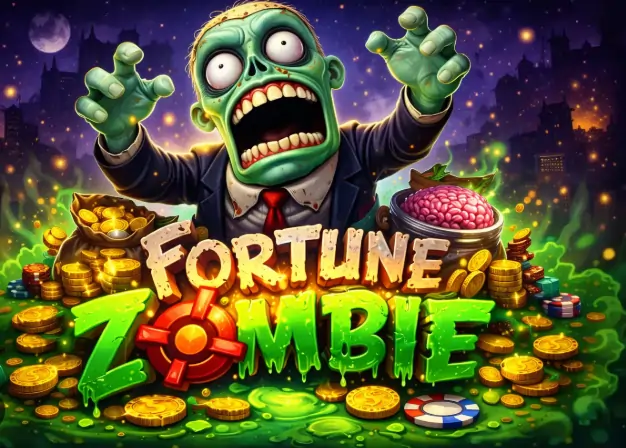
Fortune Zombie – Unlock Your Luck in the Undead World
The landscape of online gaming is evolving rapidly, moving beyond traditional slot reels into interactive arcade experiences that feel more engaging and responsive. At the forefront of this evolution stands Fortune Zombie, a zombie‑themed fish shooting game from TaDa Gaming that has captivated players across Asia and beyond. This isn’t just another fishing or shooting title; it is a high‑stakes survival mission where your decisions, target priority, and bankroll discipline shape your results—while an underlying Random Number Generator (RNG) still controls every kill and payout.
In this comprehensive guide, we’ll explore the world of Fortune Zombie, focusing on mechanics, strategies, and practical tips that help you survive the undead waves and make smarter decisions with every bullet.
The Core Concept: Survival Meets Slot Math
At its heart, Fortune Zombie blends the adrenaline of a zombie apocalypse with the mathematical precision of modern iGaming. You are dropped into a desolate, post‑apocalyptic environment where the objective is simple but challenging: eliminate incoming zombies with your cannon and claim the multipliers attached to each target. Tougher zombies typically carry higher potential payouts, so difficulty scales with reward.
Unlike traditional fishing games such as Ocean King Jackpot, Fortune Zombie trades bright oceans for crumbling cities, labs, and eerie landscapes. The fishing concept becomes shooting, but the logic stays familiar: every bullet is a bet, and every kill is a chance at a return on investment (ROI) within the game’s RTP framework.
For a broader view of how arcade‑style casino games blend slot math with shooting mechanics, specialist industry resources on arcade slots and experiential content from TaDa Gaming provide useful background.
Core Game Stats (At a Glance)
| Feature | Detail | Source |
|---|---|---|
| Game type | Zombie‑themed fish / shooting game | |
| Provider | TaDa Gaming | |
| Max win | Around 3,000x your stake (varies by platform) |
Deep Dive Into Gameplay Mechanics
Mastering Fortune Zombie starts with understanding how RNG, bullets, and targets interact. The game uses an RNG to determine when a zombie actually dies and how much it pays within its allowed multiplier range, while collision detection and animations make it feel like your aim is doing the work. That means you can improve your results by choosing better targets and managing bullets wisely, but you cannot “force” a kill—every shot is still mathematically random.
The Weaponry System
Weapons in Fortune Zombie are more than cosmetic—they define how you interact with each wave of enemies. Most versions offer three practical firing approaches:
- Manual Aim: You control every shot and target, ideal for focusing on specific zombies but demanding full attention.
- Auto‑Target: The cannon locks onto chosen target types (for example, specific zombies or bosses), helping you avoid wasting bullets on low‑value enemies.
- Area‑Style / Power Shots: Special high‑impact shots or weapons that hit multiple zombies or deal heavy damage, best saved for crowded screens or high‑value waves.
Managing cost per shot is crucial. Higher bullet denominations and powerful attacks can generate bigger hits but burn through your balance quickly; treating ammo like a budget rather than a toy is the first step toward long‑term survival in the undead world.
For general advice on optimizing ROI in shooting‑style casino games, neutral guides to fish table strategies and arcade casino titles are a good complement to this game‑specific breakdown.
Strategies to Boost Luck and Survive the Undead
While luck in Fortune Zombie is ultimately locked into the RNG, you can still optimize your decisions to get more out of every session.
- The Kill‑Steal Strategy
In shared rooms, multiple players fire at the same zombies. By watching which targets are already heavily damaged and timing your shots to land the finishing blow, you can sometimes claim full payouts after investing far fewer bullets than the original attacker. This approach is particularly tempting on medium and boss zombies, but remember that timing is influenced by both your ping and pure randomness. - Target Special Undead
Fortune Zombie features tougher zombies that behave like mid‑tier and boss fish in other shooters: they take more bullets but offer better multipliers or feature‑style rewards. Prioritizing these higher‑value zombies when your balance is healthy can create more meaningful wins than chasing endless small fry. - Bankroll Management: The 1% Rule
A simple, practical rule is to keep your bullet cost at 1% or less of your total balance. This gives you enough shots to survive cold streaks—sequences where several zombies resist for longer than expected—while keeping you in play for the moments when bosses, jackpots, and special zombies line up in your favor.
For deeper bankroll‑management frameworks that apply across slots, fish games, and arcade shooters, there are dedicated gambling strategy resources that cover risk-of-ruin, stake sizing, and session limits.
- Rhythm Shooting
Instead of holding down the fire button, many experienced players prefer controlled bursts. If a zombie doesn’t drop within a handful of shots and is not a high‑value or special target, switching to a different enemy can help avoid overcommitting to a single stubborn RNG outcome. This rhythm‑based approach feels similar to stop‑loss strategies used in trading: you define in advance how much you’re willing to risk on one opportunity.
Latency Warning: Don’t Let Ping Steal Your Fortune
In a game where milliseconds can decide who actually lands the final hit, network latency is a quiet but important factor.
- High ping can cause you to “prime” a zombie with damage while another player, closer to the server, lands the killing blow.
- In high‑stakes rooms, it can be smart to avoid chasing bosses if your connection indicator shows instability or lag.
For players in regions with less stable infrastructure, general tech guides on reducing online gaming lag (tweaking Wi‑Fi, server selection, and background apps) can offer practical, non‑casino‑specific improvements.
Secrets of the Fortune Zombie World (Without the Myths)
Players often talk about “secret patterns” or “hot modes” in fish and shooting games, but published information on Fortune Zombie emphasizes that each bullet remains an independent RNG event. You may experience sequences where more special zombies appear or where kills feel easier, yet this clustering is a natural part of random variance rather than a guaranteed trigger you can force.
Instead of relying on hidden codes or supposed “frenzy switches,” the safest way to think about Fortune Zombie’s volatility is:
- You will see streaks—both cold and hot.
- You cannot predict or “unlock” them with a set bullet count.
- The best response is to use fixed rules (budget limits, 1% bullets, pre‑set session time) and step away when those rules are hit.
If you enjoy high‑octane effects like screen‑clearing attacks, dragon waves, or mythical bosses, you can find similar emotional pacing in other titles such as Shade Dragons Fishing, which uses fantasy creatures and powerful AoE attacks instead of zombies to hook players.
Comparative Analysis: Fortune Zombie vs Other Fishing / Arcade Games
To help you choose the right title for your play style, here is a clean three‑column comparison focused on theme, skill feel, and standout features.
| Game | Theme / Skill Feel | Key Feature |
|---|---|---|
| Fortune Zombie | Horror / survival, higher perceived skill due to aiming and target choice | Special zombies, grenade‑style attacks, zombie apocalypse atmosphere |
| Ocean King Jackpot | Aquatic, medium skill, classic fish shooter | High‑speed bullet streams and iconic fish / crab specials |
| Dinosaur Tycoon | Prehistoric, higher perceived skill | Shooting dinosaur‑style targets with varied hitboxes and payouts |
For broader context on where Fortune Zombie sits in the overall fish table ecosystem, multi‑game lists and comparison hubs that cover fish tables, zombie shooters, and dragon games are useful reference points.
Advanced Strategies to Turn Fortune Zombie in Your Favor
Once you understand the basics, you can layer in more advanced tactics that fit multiplayer rooms and long sessions.
- Multiplayer Coordination
In rooms with multiple players, unspoken coordination can benefit everyone. For example, two players might focus on clearing small zombies while one concentrates on bosses, reducing chaos and making it easier to land clean finishing blows on key targets. - Target Prioritization
Think of each zombie as a risk‑reward proposition: how many bullets will you likely spend, and what is the realistic payoff range? Focusing your fire on mid‑ and high‑value zombies while letting others clear very low‑value mobs can create a healthier balance of cost versus potential reward over time. - Resource Optimization
Powerful attacks and special consumables are best reserved for dense waves or moments when multiple high‑value zombies share the screen. Using everything at the start of a low‑value wave may look exciting, but it rarely pays as well as waiting for a better opportunity. - Regional Awareness (GEO SEO)
In Southeast Asia—especially the Philippines, Malaysia, and Vietnam—fish games and zombie shooters like Fortune Zombie have become popular social experiences on both sweepstakes and offshore platforms. Local gaming hubs sometimes host tournaments or events where low‑latency connections and fast reflexes matter even more.
In some markets, you may encounter Fortune Zombie within sweepstakes casinos, which use virtual coins and promotional sweepstakes rules instead of direct cash bets; only special “sweeps” coins can be redeemed for prizes or cash. Guides that explain how these sites work are useful if you are playing from a region with stricter online gambling laws.
Psychological Engagement and Player Retention
Part of Fortune Zombie’s appeal lies in psychology, not just payouts or raw mechanics. The game is built around near‑miss moments—a zombie flickering as if it is about to die, a boss slowing down with just a sliver of health left, a big target surrounded by bullets that somehow survives one more shot. Fortune Zombie moments look and feel like you are “almost there,” and that “almost” is what keeps many players locked in for just one more round. When you combine that with your ability to choose where to aim, when to fire, and which zombies to chase, the experience feels much more personal and interactive than a traditional slot where you simply press spin and wait.
This sense of agency—believing that your decisions matter—intensifies the emotional spikes the game creates. You are not just watching symbols land; you are actively deciding whether to focus on a boss, spread your shots, or switch targets mid‑wave. When a big zombie finally goes down after you commit to it, the satisfaction feels earned, even though the underlying outcome is still driven by RNG. Conversely, when a nearly dead boss gets finished by another player, it can trigger frustration and a strong urge to “win it back,” especially if you feel your timing or aim was almost perfect. Fortune Zombie emotional push‑and‑pull is a core part of why players stay in sessions longer than they originally planned.
Academic and popular discussions of game psychology often point out that near‑misses and perceived control are two of the strongest drivers of extended play. Near‑misses make the brain treat losses as if they were “close wins,” which can be more stimulating than a straightforward loss, and perceived control makes you feel like better decisions will immediately fix bad outcomes. In Fortune Zombie, recognizing that these emotional spikes are designed effects—not hints that a huge win is about to land—helps you keep perspective. When Fortune Zombie remind yourself that every bullet is still subject to the same random rules, you are more likely to step back when you hit your limits, instead of chasing that next flicker of a boss as if it guarantees a turnaround.
External Resources for Further Exploration
To deepen your understanding of Fortune Zombie and related topics, you can explore:
- Fortune Zombie Review for a focused breakdown of features and payouts.
- Fortune King Jackpot and Ocean King Jackpot Review for classic fish shooter context.
- Dinosaur Tycoon Review, Shade Dragons Fishing Review, and Star Hunter Review to see how different themes change pacing and feel.
- Neutral guides on fish table games, sweepstakes casinos, and gaming psychology, which explain risk, RTP, and behavioral traps more broadly.
Conclusion: Is Your Luck Ready?
Fortune Zombie – Unlock Your Luck in the Undead World is more than a flashy zombie shooter; it is a continuous test of composure, decision‑making, and bankroll discipline wrapped in a post‑apocalyptic casino experience. At first glance, it looks like a pure action game where whoever taps fastest wins, but underneath the explosions and undead waves sits a structured system built on RNG, multipliers, and probability. Recognizing that structure is the first step toward playing with control instead of emotion. When you accept that every bullet is a bet and every zombie kill is governed by mathematical rules—not just reflexes—you start to treat each session less like a chaotic firefight and more like a series of measured decisions.
Understanding how RNG, bullets, and zombies interact changes how you see the battlefield. Each shot you fire draws from the same invisible engine that powers modern casino games, even though you feel the impact through visuals like hit animations, health reductions, and zombie deaths. That means your aim and target selection influence how efficiently you use your bankroll, but they never override the randomness at the core. Two players can make different choices with the same budget and see very different short‑term results, yet over many sessions, those who respect the math usually survive longer. Thinking in terms of expected value—how much you might get back over hundreds of shots, not just one dramatic kill—helps you stay grounded when the game feels hot or cold.
This is where strategies like the 1% rule and rhythm shooting come in. By keeping each bullet at 1% or less of your total balance, you effectively buy yourself more chances to ride out dry spells without going broke after a few unlucky volleys. You stop thinking, “I need this one zombie to pay,” and start thinking, “I want my balance to outlast multiple waves and feature cycles.” Rhythm shooting supports that mindset. Instead of holding the fire button out of frustration or excitement, you fire in short, controlled bursts and decide in advance how much you are willing to invest into a single target before switching. If a zombie refuses to fall within that limit, you accept that this particular RNG outcome is not in your favor and move on, preserving bullets for better opportunities.
Latency and session management add another strategic layer that many players overlook. In a shared room, a slight delay can mean the difference between landing the final blow on a boss and watching another player claim the reward you primed. By monitoring your connection quality and avoiding big commitments during unstable periods, you reduce the number of times lag, rather than judgment, costs you money. Session limits work the same way on a larger scale. Deciding in advance how long you will play or how much you are willing to lose turns each session into a closed story with a clear ending, rather than an open‑ended chase where you keep firing “until it feels right.” When the timer or limit hits, you step away regardless of whether you are ahead or behind.
Most importantly, Fortune Zombie rewards players who treat the experience as entertainment with rules, not a shortcut to guaranteed profit. The sound design, near‑miss moments, and visual drama are all tuned to keep you engaged, and that is part of the fun—as long as you remember they do not signal that a big win is “due.” Your real power lies in how you respond: choosing when to raise or lower your bullet size, when to chase a special zombie, when to accept a losing streak, and when to close the game for the day. The undead will always be there waiting for the next round. Whether you turn that chaos into a memorable, controlled experience—or an expensive spiral—depends entirely on how you play each shot, how you manage your bankroll, and how firmly you stick to the limits you set for yourself before the shooting starts.
