
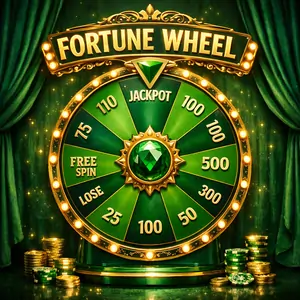
Fortune Wheel is an arcade‑style money wheel game that lets you start with tiny bets and still dream of hitting big prizes. The rules are simple—pick your stake, spin the wheel, and wait for the pointer to decide your fate—but behind that simplicity is a strong mix of risk and reward that keeps players coming back for “just one more spin.” For Filipino and Asian players who grew up around perya booths and fiesta games, Fortune Wheel feels like a modern, mobile‑friendly way to enjoy that same small‑stakes, big‑thrill experience.
As of July 2025, PAGCOR (Philippine Amusement and Gaming Corporation) reported more than 32.1 million active electronic gaming players in the Philippines, almost a 300% increase over 2024, underscoring how fast digital gaming is growing locally. Industry reports also indicate that around 97.1% of Filipino internet users engage in some form of digital gaming, one of the highest participation rates in the world, making the country a natural hotspot for fortune‑wheel‑style titles.
Introduction
Fortune Wheel sits in the sweet spot between casual arcade fun and classic casino excitement. You don’t need to memorize rules or strategies; the entire game loop can be explained in a few seconds. That makes it perfect for beginners, mobile gamers, and small‑stakes players who want entertainment first and math second.
In this Fortune Wheel review, you’ll learn how the game operates from the first bet to the final spin, how prize bands and volatility behave, and how to manage your bankroll if you’re spinning from small stakes in the hope of landing big prizes. We’ll also look at the game through a Filipino lens—connecting it to perya culture, mobile data realities, and how it compares to other Asian iGaming titles such as Mini Bingo, Keno, and Lotto.
What Is the Fortune Wheel Arcade Game?
At its core, Fortune Wheel is a money wheel: a vertical wheel divided into segments, each segment representing a different prize or outcome. When you spin, the wheel rotates quickly, then slows until the clapper or pointer lands on a single segment—just like traditional money wheels in land‑based casinos and resort properties.
Different implementations exist:
- Arcade/ticket versions hand out tickets or points depending on where the wheel stops, similar to prize wheels in amusement centers.
- Real‑money versions pay multipliers of your stake, like simplified money‑wheel tables or fortune‑wheel slots.
- Hybrid app versions mix both, with daily free spins, in‑app missions, and bonus modes to keep players engaged.
Regardless of format, the fantasy is the same: spin from a small stake and hope the wheel lands on a big prize wedge. This is the same appeal that drives famous money‑wheel brands and Wheel‑of‑Fortune‑style cabinets in arcades worldwide.
How to Play: From Bet to Spin

Fortune Wheel is purposely kept as simple as possible so anyone can start playing immediately.
- Choose your stake
Select a bet size that fits your budget. Many Fortune Wheel apps and arcade versions allow very small stakes, making it friendly for cautious players. - Place your bet or confirm your spin
Some versions let you bet on specific symbols or prize bands (for example, low, medium, or high), while others simply tie your stake to the entire wheel and let chance decide. - Spin the wheel
Tap the spin button (or pull a lever). The wheel accelerates, then slows, building drama as the pointer passes each segment and clicks toward its final stop. - Outcome and payout
When the wheel stops, the segment under the pointer is the result. If it’s a prize or multiplier wedge, you’re paid according to that segment’s payout table; if it’s a low‑value or “lose” wedge, you get little or nothing back. - Repeat or cash out
Many players immediately go again, but disciplined players think in terms of sessions—deciding in advance how many spins or how much budget they’re willing to use.
This tight loop makes Fortune Wheel easy to play during short breaks, commutes, or while relaxing at home. For players who enjoy simple “choose and reveal” mechanics, it’s the wheel‑based cousin of number‑driven games like Number Game and Lucky Ball.
Payouts, Prize Bands and RTP Feel
Exact payouts depend on the platform, but most Fortune Wheel implementations follow the same logical structure:
| Prize band | Segments | Typical payout (per 1 unit) |
|---|---|---|
| Low‑risk prizes | Many | 1x – 2x |
| Medium‑risk band | Fewer | 5x – 10x |
| High‑risk band | Rare | 20x+ or special bonus |
This “tiered” design matches how many casino money wheels and fortune‑style slots are balanced: common segments with low payouts, rarer segments with higher multipliers, and a handful of premium wedges with big‑win potential.
From an RTP (Return to Player) standpoint, most digital fortune‑wheel‑type games operate with a theoretical RTP between roughly 85% and 95%, depending on how many high‑volatility wedges are included and how generous the bonus features are. In “Big Spin” or high‑jackpot variants, the top prize odds are often in the region of 1 in 1,000,000 or worse, while small 2x‑style payouts can have hit rates in the 1 in 3.7 range, similar to low‑tier wins on many slots.
From a player’s perspective, this means:
- Low‑risk segments hit often but do not guarantee long‑term profit after high‑edge math is considered.
- Medium‑risk segments feel like meaningful wins, covering several previous spins and sometimes putting you ahead briefly.
- High‑risk wedges and bonuses can transform a session in one spin, but they’re so rare that you should never plan your bankroll around them.
Because most operators set RTP below 100%, Fortune Wheel behaves much like lottery‑style games such as Keno and Lotto—exciting, but always tilted mathematically in favor of the house over many sessions.
Risk vs Reward: Small Stakes, Big Prizes
The headline “From Small Stakes to Big Prizes” captures Fortune Wheel’s risk vs reward story perfectly. The game allows:
- Very small bets, which is ideal for budget‑conscious players or those just testing the game.
- Fast‑paced sessions where extra spins feel affordable.
- The constant possibility—however unlikely—of landing a huge prize wedge.
From a risk perspective:
- Focusing on low‑risk bands gives frequent small returns and a relatively smooth balance line, but big wins are rare.
- Emphasizing high‑risk wedges creates a swingy experience: many losing spins followed by occasional huge hits.
A practical small‑stakes approach:
- Divide your session budget into at least 50–100 spins, so you can absorb normal variance without panic.
- View most spins as base game spins intended for fun, and only a minority as serious “jackpot attempts.”
- After landing a big prize, lock in part of your profit and avoid instantly raising stakes—this is where many players give everything back.
Risk–reward trade‑offs like this also appear in physics‑driven games such as Plinko and Peg Drop, where chips can fall into huge multipliers but usually land in safer bins.
Fortune Wheel and the Filipino Perya Vibe
For Filipino players, Fortune Wheel strongly echoes the perya experience: spinning wheels, flashing lights, cheering crowds, and that familiar feeling of “swerte na sana” as the pointer approaches your chosen symbol. Money‑wheel games are fixtures at local fiestas and amusement centers, so Fortune Wheel feels culturally familiar even when played on a phone or PC.
Recent market analyses suggest that players aged 18–34 now make up around 69% of the Philippine digital gaming audience, reflecting how younger adults dominate the overall player base. Interestingly, the 35–44 age group shows the highest daily engagement rate at about 46%, suggesting that perya nostalgia and digital gaming habits now span multiple generations, not just Gen Z or young millennials.
If your readers enjoy perya‑style games, they often also gravitate to other “draw and reveal” titles like Mini Bingo and Number Game, which provide similar emotional highs using numbers and patterns instead of wheel wedges.
Mobile and Data‑Friendly Gameplay

One huge advantage of Fortune Wheel—especially for players in the Philippines and Asia—is that most versions are lightweight and data‑friendly:
- They rely on simple 2D or light 3D animations instead of HD live video, keeping bandwidth low.
- Rounds load quickly and run smoothly on mid‑range or older smartphones, which are common in the local market.
- Data usage per spin is small, so prepaid users can play comfortably without burning through their entire monthly allocation.
Practical tips for mobile players:
- Prefer Wi‑Fi for long sessions, but Fortune Wheel remains relatively safe even on 4G/5G with modest data caps.
- Avoid running high‑bandwidth apps (like video streaming) in the background while playing.
- If your version offers graphics or quality settings, keeping them on default or low helps manage both data and battery.
Because it’s so data‑light, Fortune Wheel is an excellent “commute game” or “waiting room game,” much like drop‑and‑fall titles such as Drop Ball and Crash Dice that also deliver quick suspense without heavy streaming.
Simple Strategies and Player Tips
Fortune Wheel outcomes are random, but how you structure your play can significantly affect your experience. Consider these practical, small‑stake strategies:
- Define a strict session budget
Choose an amount you’re willing to lose (for example, 200–500 pesos) and treat it as the cost of entertainment. Once it’s gone, you stop, win or lose. - Plan your spins
Decide up front how many spins you want (e.g., 50 or 100) and size your stakes so your balance can support that plan. This prevents betting too big early. - Mix risk bands
If your version allows selecting prize bands or symbols, keep most of your play on lower‑ and medium‑risk outcomes, dedicating only a small slice of your budget to high‑risk jackpot wedges. - Use bonuses and free spins smartly
Many apps and sites offer free spins, daily rewards, or loyalty perks; use these when you can focus and enjoy the full moment, rather than spinning absent‑mindedly while multitasking. - Respect win and loss limits
Set a win goal (like doubling your starting stake) and a loss limit (your original budget). Hitting either one should trigger a stop, even when you feel tempted to continue.
These habits are just as useful in other luck‑based games such as Mini Bingo, Keno, and Lucky Ball, where bankroll control matters far more than complex strategies.
Psychological Traps: Near Misses and “One More Spin”
Fortune Wheel makes heavy use of the near miss effect, a well‑researched psychological phenomenon in gambling and arcade game design. You’ll often see the pointer slow down just before a big jackpot wedge and then click into a smaller prize, creating a sense that you were “one step away” from a life‑changing hit.
Near misses are dangerous because:
- Your brain reacts almost like you actually won, releasing dopamine and excitement.
- They create the illusion that a big prize is “getting close,” even though each spin is independent.
- They encourage longer sessions, higher bets, and the classic “one more spin” mentality.
To stay in control:
- Remind yourself that, mathematically, a near miss is no different from any other loss.
- Don’t increase your stake right after a near miss; the wheel doesn’t remember previous spins or “owe” you anything.
- Use clear rules—such as a fixed number of spins or a hard stop after a set time—to decide when you’re done, rather than relying on gut feeling.
These psychological hooks also appear in games like Plinko and Peg Drop, where chips or balls narrowly miss high‑value slots, keeping you emotionally invested. Naming the effect directly in your review helps readers guard themselves and builds trust in your content.
Fortune Wheel vs Other Arcade Games
Fortune Wheel sits alongside several other quick, chance‑based games in the Asian iGaming ecosystem.
- Versus Spin the Wheel – Spin the Wheel is often more generic, with mixed prize segments and less emphasis on themed fortune wedges. Fortune Wheel typically leans harder into “big prize” branding and may feature more structured bonus bands.
- Versus Lucky Wheel – Lucky Wheel focuses on straightforward prize segments; Fortune Wheel tends to highlight jackpot wedges and bonus features that encourage small‑stake chasing.
- Versus Color Game – Color Game offers a very transparent, dice‑and‑color experience with perya roots, focusing more on frequent, modest swings than rare huge wins.
- Versus Mini Bingo / Keno / Lotto – Mini Bingo, Keno, and Lotto draw numbers instead of spinning a wheel but share a similar “small stake, big chance” feel.
Globally, digital arcade and casino‑style games attract a broad and diverse audience; in large markets like the United States, survey data shows a majority of players come from White backgrounds, with smaller but significant shares from Hispanic, Black, and Asian communities. Against that backdrop, the Philippines stands out as a growth driver in Asia, with extremely high digital‑gaming participation and a fast‑growing appetite for small‑stake, mobile‑friendly titles like Fortune Wheel.
Overall Verdict: From Small Stakes to Big Prizes
Fortune Wheel takes a timeless gambling format—the spinning money wheel—and packages it into an accessible, data‑friendly experience tailored to modern mobile players. Its rules are straightforward, its visuals are instantly understandable, and its prize structure lets you start from tiny stakes while still dreaming of very large, high‑risk wedges. For Filipino and Asian players, the strong perya vibe, fast‑paced rounds, and compatibility with typical mobile data plans make it feel both familiar and fresh.
As long as you remember that Fortune Wheel is built around randomness and a meaningful house edge, it’s a fun way to enjoy a few spins between other arcade sessions. It pairs naturally with number‑based games like Mini Bingo, Keno, Lotto, and Lucky Ball, as well as physics‑driven titles like Plinko, Peg Drop, Drop Ball, and Crash Dice, giving you a full lineup of quick‑hit entertainment on Asian iGaming.
Viewed purely as entertainment—small stakes, big dreams, but always within a budget—Fortune Wheel earns a strong recommendation for casual players looking for a satisfying spin‑and‑win thrill in 2026’s booming Filipino and Asian gaming scene.
