If you enjoy number games that mix simple rules with life‑changing potential, lotto sits at the very top of the list for many casual and serious players alike. In this lotto review, we break down how draws work, what the odds and payouts really look like, and what you should expect from modern online and mobile lotto in 2026—especially in the Philippine and wider Asian context.
As part of Asian iGaming’s arcade and number game coverage, this guide is written for players in Asia and beyond who want clear, honest information rather than marketing slogans. You will also find natural links to specific games like Lotto 6/42, Mega Lotto 6/45, Super Lotto 6/49, Grand Lotto 6/55, Ultra Lotto 6/58, and digit games like 6D Lotto, 4D Lotto, 3D Lotto (Swertres), 2D Lotto (EZ2), STL Pares, STL Swer3, and STL Swer2.
Introduction to Lotto
Lotto is a draw-based number game where you select a set of numbers from a fixed pool and hope they match the numbers drawn at scheduled times. Classic examples most Filipino players recognize include Lotto 6/42, Mega Lotto 6/45, Super Lotto 6/49, Grand Lotto 6/55, and Ultra Lotto 6/58, all of which use the familiar “6‑out‑of‑X” matrix format.
Unlike fast arcade titles, lotto often focuses on large top prizes with relatively slow draw cycles, which creates anticipation rather than constant action. Many players buy tickets days in advance, wait for televised or streamed draws, and then check results with friends or family. That ritual is part of lotto’s cultural appeal and explains why it sits alongside faster games like keno and Lucky Ball in many lobbies instead of being replaced by them.
In Asian-facing markets, lotto remains popular because it is familiar, easy to understand, and often integrated into both regulated lottery products and online gaming platforms. Many players treat lotto as a low-frequency, high-dream game that complements faster experiences like Keno or digit draws.
In this lotto review, we will cover:
- How lotto works and the rules you must know
- What the gameplay and draw experience feels like online and on mobile
- How odds, prize tiers, and effective RTP behave in typical lotto formats
- Practical strategies, bankroll tips, and common myths
- Pros and cons of lotto versus other number games
- The best types of places to play lotto safely and responsibly
How Lotto Works
For readers searching “how to play lotto online” or “lotto rules explained,” the structure is straightforward but has a few important details, especially when you compare different variants side by side.
Basic rules and flow
At its core, lotto follows a simple loop:
- You choose a set of numbers from a fixed pool, such as 6 numbers from 1–42, 1–45, 1–49, 1–55, or 1–58, depending on the game.
- You buy a ticket for a specific draw (or multiple future draws using advance play or multi-draw options).
- At the scheduled time, the operator draws the winning numbers, sometimes with an extra bonus or “special” ball.
- You win prizes based on how many numbers you match and which prize tier your ticket falls into.
In online and digital variants, you can select numbers manually or use “quick pick” to have the system choose them for you at random. Tickets are stored in your account instead of on paper, which means fewer worries about losing a physical ticket or forgetting to check results.
Main matrix lotto games
The most recognizable products are the matrix-style games:
- Lotto 6/42 – 6 numbers drawn from 1 to 42, often positioned as an accessible entry-level game with more modest but still significant jackpots.
- Mega Lotto 6/45 – 6 from 1 to 45, balancing difficulty and prize size; a staple in many weekly routines.
- Super Lotto 6/49 – 6 from 1 to 49, with larger possible jackpots and longer odds.
- Grand Lotto 6/55 – 6 from 1 to 55, typically offering higher jackpots due to its tougher combinations.
- Ultra Lotto 6/58 – 6 from 1 to 58, usually among the hardest to hit but capable of generating headline-grabbing prize amounts.
As the upper number in the matrix increases, the number of possible combinations grows dramatically, which is why Ultra and Grand draws can support much larger jackpots than 6/42 while being harder to win.
Digit lotto and STL-style games
Beyond 6‑out‑of‑X formats, digit games add variety:
- 6D Lotto – You pick a 6‑digit combination, often with prizes for exact order hits and, in some formats, partial matches.
- 4D Lotto – Similar structure with 4‑digit selections, resulting in more frequent but smaller top prizes.
- 3D Lotto (Swertres) – A three-digit game (often 000–999), popular for its relatively simple mechanics and quicker result cycles.
- 2D Lotto (EZ2) – Two-digit draws with straightforward payouts, often positioned as an easy, entry-level number game.
Then you have STL-type products like:
- STL Pares – Focused on drawing pairs of numbers.
- STL Swer3 – A three-digit format similar in spirit to 3D but localized.
- STL Swer2 – A two-digit game that appeals to players who prefer smaller number fields.
These digit and STL formats share lotto’s “draw-and-match” core but shift the experience towards more frequent results and generally smaller prize ceilings.
Key terms you should know
To understand lotto reviews and compare different draws, it helps to know a few core terms:
- Ticket – Your entry into a draw, showing your selected or quick-pick numbers.
- Matrix – The format, such as “6/42”, “6/45”, or “6/58”, defining how many numbers are drawn from what range.
- Jackpot – The top prize, usually awarded for matching all main numbers.
- Prize tiers – Levels of prizes for matching fewer numbers (for example 3, 4, or 5 numbers, sometimes plus a bonus ball).
- Rollover – When no one wins the jackpot and a portion of the prize pool carries over to the next draw, increasing the top prize.
Once these are clear, reading detailed lotto reviews and comparing formats like Lotto 6/42 versus Grand Lotto 6/55 becomes much easier.
Gameplay and Draw Experience
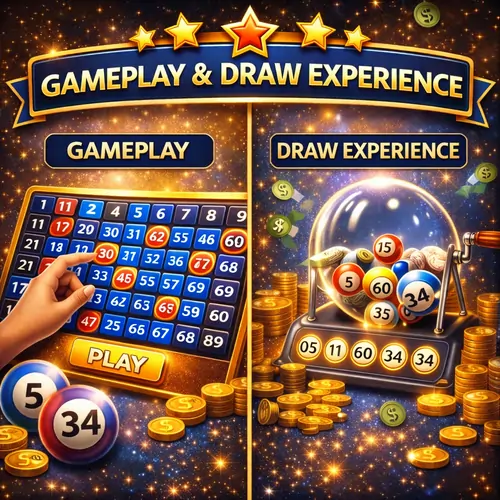
The lotto experience revolves around how you buy tickets, follow draws, and interact with results, especially online and on mobile.
Interface and usability
Online lotto interfaces generally provide simple number grids, quick-pick buttons, and clear indicators of draw dates, ticket prices, and jackpots. On a platform like Asian iGaming or an integrated e-lotto portal, you will often see tiles for each game—Lotto 6/42, Mega Lotto 6/45, Super Lotto 6/49, Grand Lotto 6/55, Ultra Lotto 6/58—each showing the current jackpot and next draw date.
Good UX allows you to:
- Switch easily between matrix and digit games.
- Toggle between single-draw and multi-draw entries.
- Check potential prize tiers for matching fewer numbers.
- Review your ticket history and see which draws are pending, completed, or claimed.
Mobile-specific features
Because many players now check results and buy tickets via their phones, mobile UX has become central to the lotto experience. Modern lotto or e-lotto apps typically offer:
- Push notifications when draw results are ready or when jackpots in games like Ultra Lotto 6/58 or Grand Lotto 6/55 reach notable thresholds.
- Number grids sized for thumb input, with easy “quick pick” and “clear all” controls.
- Optional haptic feedback when you tap numbers or confirm a ticket, giving each selection a subtle physical feel.
- Battery-conscious themes and streamlined animations so you can browse multiple games—from Lotto 6/42 to 2D Lotto—without draining your phone quickly.
These touches might seem minor, but they make a big difference when lotto becomes a daily habit rather than a once-in-a-while purchase.
Who will enjoy lotto?
Lotto tends to appeal to players who:
- Like simple, easy-to-understand rules with no complex strategy.
- Enjoy the idea of large potential payouts even with small ticket prices.
- Are comfortable waiting between draws instead of getting instant resolution every few seconds.
If you prefer constant action and rapid feedback, you might combine lotto tickets with faster number or arcade games—such as keno, Lucky Ball, or Crash Dice—while keeping lotto as your “big dream” layer in the background.
Odds, Prize Tiers, and Effective RTP
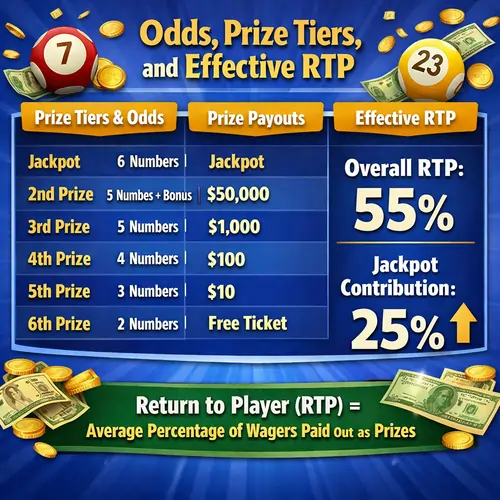
When you search “lotto odds explained” or “is Lotto 6/45 worth playing,” you are really asking how hard it is to win meaningful prizes and what portion of stakes returns to players as prizes over time.
Jackpot odds and matrix differences
The odds of winning the jackpot depend heavily on the game’s matrix. A 6/42 structure has fewer possible combinations than a 6/58 structure, which translates to:
- Better jackpot odds in Lotto 6/42 compared with Ultra Lotto 6/58.
- Intermediate difficulty for Mega Lotto 6/45 and Super Lotto 6/49.
- The longest odds (and largest potential jackpots) for Grand Lotto 6/55 and Ultra Lotto 6/58.
Digit games behave differently. In 3D Lotto, there are only 1,000 possible combinations (000–999), so the top prize is easier to hit than a 6‑number jackpot, but it also pays far less. 2D Lotto is even more straightforward, with only 100 possible two-digit results in many formats, again trading difficulty for smaller fixed prizes.
Effective RTP in lotto
Lotto’s effective long-term return to player tends to be lower than most casino games because a significant portion of the pool goes to jackpots, operations, and beneficiary programs rather than being recycled as frequent small wins. In matrix games like Lotto 6/42 or Super Lotto 6/49, this means:
- Very long odds for the top prize.
- A series of smaller prize tiers that provide modest but infrequent returns.
- An overall return rate that is more about funding big jackpots and programs than about tight, casino-style RTP.
Digit games such as 4D Lotto and 6D Lotto may publish fixed-payout tables that make the effective return more transparent, but the core idea remains: lotto is high-variance and not designed for grinding advantage.
Prize tier structure example
A simplified matrix lotto might use the following prize logic at a fixed ticket cost:
- Match all 6 main numbers – jackpot (rollover-capable in some formats).
- Match 5 main numbers + bonus ball – large secondary prize.
- Match 5 main numbers – strong mid-tier win.
- Match 4 or 3 numbers – smaller, more attainable prizes.
Digit games like 3D Lotto and 2D Lotto often pay fixed amounts for exact matches (for example, a fixed prize for matching the three-digit or two-digit result in exact order), giving players clear expectations per ticket.
Strategies, Tips, and Common Myths
Just like keno and other number games, lotto attracts many personal systems and myths, even though regulated draws rely on random selection.
Bankroll management and expectations
Because the odds of hitting a top-tier prize are so long, managing your budget and expectations is crucial. A healthy, sustainable approach usually looks like this:
- Decide how much you can afford to spend per week or month across all games—Lotto 6/42, Mega Lotto 6/45, Ultra Lotto 6/58, and digit draws—and stick to it.
- Treat every ticket as an entertainment purchase with a small chance of a big return, not as a financial plan.
- Avoid chasing losses by buying extra tickets immediately after a losing draw.
- Consider spreading your budget across different games—perhaps one or two matrix draws a week plus occasional 2D or 3D entries—rather than going all-in on a single draw.
This mindset is similar to how you should approach high-variance games like keno or high-volatility slots.
Number selection and “systems”
Many players use birthdays, anniversaries, repeating patterns, or “lucky” combinations in games like Lotto 6/42 and Grand Lotto 6/55. Others track “hot” and “cold” numbers in 3D or 2D Lotto and try to ride perceived streaks.
In properly run draws, each valid combination has the same chance of being selected in each draw. Past results do not influence future outcomes in a way you can exploit. You are free to use personal systems if they make the game more fun or meaningful, but they should not be mistaken for guaranteed strategies.
Syndicates and group play
One genuine way to change your experience is through syndicates or group play:
- You and other players pool your money to buy a larger block of tickets across games like Lotto 6/42, Mega Lotto 6/45, and Super Lotto 6/49.
- The group holds more combinations, which increases the chance that at least one ticket hits a prize.
- Any winnings are shared according to your agreed shares.
Syndicates do not change the underlying odds per ticket, but they can spread risk and make occasional wins more likely, at the cost of sharing jackpots if you hit one.
Pros and Cons of Playing Lotto
To help you decide whether lotto deserves a place in your gaming mix, here are the key advantages and disadvantages in simple terms.
Advantages
- Simplicity – Rules are very easy to learn, even for total beginners.
- Big jackpots – Matrix games like Ultra Lotto 6/58 and Grand Lotto 6/55 offer headline-level top prizes.
- Low-cost participation – Single tickets are often inexpensive, making occasional play accessible.
- Variety – You can mix classic draws (Lotto 6/42, Mega Lotto 6/45) with faster digit games like 2D, 3D, STL Pares, STL Swer3, and STL Swer2.
These traits make lotto appealing if you like long-shot, high-upside games that fit into a weekly routine instead of demanding constant attention.
Disadvantages
- Long odds – The probability of hitting a 6‑number jackpot is extremely low in most matrices, especially 6/55 and 6/58.
- Lower effective RTP – A large share of stakes funds jackpots, operations, and programs, leaving a lower long-term return rate than most casino games.
- Slow feedback – If you prefer rapid results, waiting between draws in Lotto 6/42 or Super Lotto 6/49 can feel unsatisfying.
Taken together, lotto is best approached as an occasional entertainment expense, not a steady-profit strategy or income source.
Best Places to Play Lotto Online
When players ask “where should I play lotto online,” they are usually concerned with safety, transparency, and convenience rather than just game choice.
What to look for in a lotto platform
Look for platforms that:
- Clearly display licensing and regulatory information.
- Publish detailed rules, prize tiers, and draw schedules for each game—from Lotto 6/42 up to Ultra Lotto 6/58.
- Provide straightforward result-checking tools for matrix, digit, and STL draws.
- Offer responsible play tools such as deposit limits, spend reminders, and easy self-exclusion.
If a site makes it hard to understand how prizes are calculated, when draws happen, or how you can claim winnings, that is a strong signal to play elsewhere.
Online lotto vs instant number games
On a hub like Asian iGaming, lotto sits next to faster titles such as keno, Lucky Ball, Number Game, and arcade-style instant wins. Compared with these, lotto stands out for:
- Larger top prizes in games like Grand Lotto 6/55 and Ultra Lotto 6/58.
- Slower, scheduled results that feel more like events than continuous gameplay.
- Deeper cultural familiarity among players who grew up with televised draws.
Many players choose to keep one or two regular lotto entries running each week while using keno or digit games for short daily sessions.
Final Verdict on Lotto
Lotto remains one of the most iconic number games because it combines very simple rules with the appeal of potentially life-changing prizes. The trade‑off is extremely long odds and a relatively modest effective RTP, which means it should be played with a strict budget and realistic expectations.
If you enjoy dreaming about big jackpots—whether on Lotto 6/42, Mega Lotto 6/45, Super Lotto 6/49, Grand Lotto 6/55, or Ultra Lotto 6/58—and you like mixing them with quicker digit draws like 6D, 4D, 3D, 2D, STL Pares, STL Swer3, and STL Swer2, lotto can be a fun, varied part of your weekly gaming routine.
Keep your stakes modest, avoid chasing losses across multiple draws, and treat each ticket as a paid chance at entertainment rather than a guaranteed path to profit.