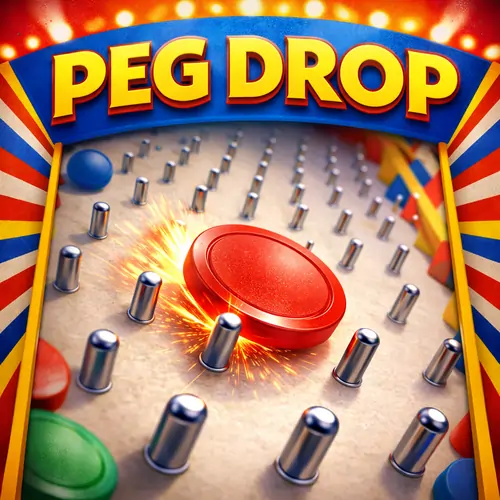
Peg Drop is one of the most engaging pegboard‑style arcade games in today’s iGaming market, combining simple physics, colourful visuals, and fast rounds that appeal to casual players and real‑money bettors alike. When you understand how Peg Drop works, how it compares with Plinko‑style titles, and where it fits in the broader Asian arcade ecosystem, you can decide if it deserves a spot in your regular game rotation.
What Is Peg Drop and Why Is It Popular?
Peg Drop belongs to the family of physics‑based ball‑drop games where you release a ball from the top of a board filled with pegs and watch it bounce unpredictably into one of several prize slots. Each slot usually carries a different multiplier or payout, so every drop mixes suspense, randomness, and the possibility of high‑value hits in a way that feels intuitive even for new players.
On many Asian‑focused platforms, Peg Drop appears alongside other arcade games because operators recognise how strongly mobile users respond to short, session‑friendly formats. With just a few taps, players can set a stake, pick a drop point, and see the result in seconds, which fits perfectly into on‑the‑go habits in markets like the Philippines and the wider Southeast Asian region.
If you want a detailed breakdown of a specific implementation, you can refer to the dedicated Peg Drop review at Asian iGaming, which focuses on layout, user experience, and how it plays within a real‑money lobby. That kind of review helps you see how Peg Drop’s theoretical math and aesthetics translate into actual gameplay for real players.
Core Game Mechanics: How Peg Drop Works
Peg Drop follows a simple loop that makes it accessible but still exciting. Most real‑money or arcade versions share the same basic structure:
- Choose your stake or bet size.
- Select any available risk level (low, medium, or high) if the game offers volatility modes.
- Aim your drop position along the top of the board.
- Release the ball and watch it bounce through the pegs.
- Collect your win based on the multiplier slot where the ball lands.
The physics engine ensures the ball’s path is unpredictable, with each collision with a peg slightly changing its direction, which keeps the outcome uncertain and visually satisfying. This blend of visible physics and hidden randomness is why peg‑drop games feel fair and suspenseful, even though they are ultimately governed by random number generators in regulated casino versions.
Mobile peg‑drop titles such as Blinko Peg Drop and Peg Drop: Joy Drop on Android show how the same mechanics can be packaged as casual apps, with simplified controls and bright visuals for non‑casino audiences. In those versions, the focus is on entertainment and progression rather than wagering, but the underlying feel of each drop remains recognisably the same.
RTP, Volatility, and Risk Settings in Peg Drop
When Peg Drop is implemented as a real‑money game, it normally publishes a Return to Player (RTP) percentage and sometimes offers multiple volatility or risk modes, much like online Plinko products. RTP is the long‑term average share of stakes that the game returns to players, whereas volatility describes how smooth or “swingy” your short‑term results will feel.
Some Plinko‑style games highlight very high RTP values and flexible volatility controls, presenting options that range from frequent small wins to rare, high‑multiplier payouts. Peg Drop can use a similar structure by adjusting the multiplier distribution at the bottom of the board, with safer profiles concentrating more moderate values and riskier profiles featuring extreme multipliers with lower hit rates.
Understanding these ideas helps you manage expectations when playing Peg Drop in a casino lobby. If you choose a high‑risk layout, you should be prepared for long stretches of small or zero returns in exchange for the chance of hitting a big multiplier, which is typical behaviour for high‑volatility designs across slots and arcade games. Educational guides on Plinko volatility and RTP offer a good mental model for Peg Drop, because both genres share the same principles of risk versus reward.
Visual Design, Audio, and User Experience
A big part of Peg Drop’s appeal lies in its presentation. Developers and operators know that players often choose arcade titles based on how they look and feel in the first few seconds, so modern peg‑drop games emphasise:
- Bright, neon‑style pegs and clear multiplier labels.
- Smooth animations as the ball bounces from peg to peg.
- Clean, mobile‑optimised layouts with large buttons and easy‑to‑read values.
Articles discussing how arcade mechanics are redefining the iGaming experience point out that these visual and UX enhancements are central to the success of modern crash, dice, and drop games. They make it easier for new players to understand what is happening, while experienced players benefit from a crisp interface that supports fast, repeated rounds without confusion or clutter.
Asian‑focused brands go further by designing lobbies specifically around mobile play, ensuring titles like Peg Drop load quickly and run smoothly on mid‑range smartphones common across the region. That mobile‑first approach, combined with supportive UX, is one reason arcade games enjoy strong engagement in markets such as the Philippines, India, and other parts of Southeast Asia.
Step‑by‑Step: How to Play Peg Drop

Explaining Peg Drop in conversational, step‑by‑step language helps your content capture voice and question‑based searches like “how do you play Peg Drop” or “how does the Peg Drop game work.” A typical instruction set looks like this:
- Set your budget and stake – Decide how much you are comfortable spending for the session, then pick a per‑drop stake that lets you enjoy many rounds rather than just a few.
- Select a risk level (if available) – Low‑risk modes tend to give smaller multipliers more often, while high‑risk layouts concentrate value in fewer, larger multipliers.
- Choose your drop position – Tap or click along the top row to decide where to release the ball; some players prefer central positions, while others experiment with the edges, although no drop point is guaranteed to be better in a fair RNG environment.
- Release the ball – Hit the main action button to drop the ball and watch it cascade through the pegs, changing direction with each collision.
- Check your result – When the ball lands in a slot, your stake is multiplied by that value, and winnings are credited instantly or displayed as points in casual versions.
Practical Tips and Bankroll Strategies for Peg Drop
Even though Peg Drop is a luck‑based game, there are still sensible ways to approach it so that your experience stays fun and sustainable. First, choose a risk setting that makes sense for your bankroll and tolerance for swings; if you are playing with a relatively small budget, low‑ or medium‑risk profiles typically provide longer sessions and more feedback.
Second, consider your session length rather than chasing individual big hits. Spreading your budget over many small drops helps you see the game’s long‑term behaviour more clearly and reduces the emotional impact of any one unlucky result, which is consistent with advice on managing volatility in Plinko and other high‑RTP games.
Third, make use of responsible gaming tools and guidelines provided by regulators and compliance‑focused organisations. Philippine regulator PAGCOR, for example, publishes official recommendations on responsible gaming, including setting time and money limits, recognising signs of problem gambling, and seeking help if needed. Broader overviews of responsible gaming practices also stress that players should treat games like Peg Drop as entertainment rather than income, and avoid playing when stressed or trying to recover losses.
Peg Drop in the Asian iGaming and Arcade Ecosystem
Peg Drop does not exist in isolation; it is part of a wider group of arcade‑style titles that have become a core feature of Asian iGaming offerings. Industry overviews highlight how operators increasingly mix slots, live casino, sports betting, and quick arcade content to give players more variety and keep sessions dynamic.
On Asian‑focused sites, Peg Drop often appears alongside crash, dice, and number games aimed at similar audiences. You will frequently see it partnered with titles like:
- Drop Ball – another ball‑drop arcade game with instant results.
- Crash Dice – a dice‑driven crash‑style experience.
- Fish Ball – a quirky, arcade‑inspired ball game with its own theme.
- Win Go and Fast Win – fast‑cycle number games designed for constant action.
- Speed Dice and Turbo Dice – quick dice games that appeal to players who like simple odds and fast outcomes.
Asian iGaming and similar outlets track this shift, noting how arcade mechanics and mobile‑centric lobbies are redefining how players interact with online casinos in regions like Southeast Asia and India. For players in Cagayan de Oro or elsewhere in the Philippines, this means Peg Drop and related games are increasingly prominent within locally accessible, mobile‑friendly platforms.
Comparing Peg Drop With Plinko and Other Drop Games
Plinko is the best‑known reference point for understanding Peg Drop, because both games use a pegboard layout and rely on gravity plus randomness to produce outcomes. Plinko guides explain how different numbers of rows and risk settings influence the volatility of results, and the same logic can be applied when you evaluate Peg Drop’s board and multiplier spread.
In many lobbies, Peg Drop is either branded as a distinct game or positioned as a variation of the Plinko concept, with different visual themes, sound design, and UX choices. When you read full Plinko strategy articles, you will see common advice like choosing volatility based on bankroll, avoiding emotional decisions, and focusing on entertainment value, all of which maps directly onto healthy Peg Drop play.
If you want to explore Plinko in more detail, content such as “Plinko – The Complete Guide for Online Casino Players” and volatility explainers can give you a deeper understanding of why certain configurations feel more or less risky. That knowledge helps you interpret Peg Drop’s multiplier ladders and layout without expecting any pattern or aiming trick to guarantee wins, because fair implementations are built on certified random processes.
Arcade Games: Lucky Series, Dice Games, and More
One reason Peg Drop fits so naturally into modern lobbies is that it complements a wide range of quick games targeted at similar player profiles. The “Lucky” series, for instance, usually offers number‑based draws with simple bets and rapid rounds:
- Lucky 3 – compact three‑number game with straightforward rules.
- Lucky 5 – slightly extended format for players who like more combinations.
- Lucky 7 – often themed around the iconic number seven, familiar to slot fans.
These games share Peg Drop’s emphasis on quick decisions and immediate results, making it easy for players to transition between peg‑drop, number, and dice experiences during a single mobile session. Analysts covering the Asian market note that this variety, combined with localised UX and payment options, has been central to the growth of iGaming across the region.
Dice‑oriented titles like Speed Dice and Turbo Dice add yet another flavour, allowing players who enjoy probability‑driven gameplay to engage with simple, transparent odds. Together with Peg Drop and ball‑drop games, these titles build a cohesive arcade section that feels more like a modern game hub than a traditional casino lobby.
Safety, Fairness, and Responsible Gaming
As with any real‑money game, the safety and fairness of Peg Drop depend heavily on the platform hosting it. Reputable operators use licensed software providers, RNG certification, and clear disclosures about RTP to ensure players know what to expect over time. Regulatory bodies in Asia, including PAGCOR in the Philippines, emphasise responsible gaming, player protection, and clear information about terms and conditions.
Players are encouraged to follow official responsible gaming guidelines, such as setting deposit limits, taking regular breaks, and avoiding play when under emotional or financial stress. In‑depth guides from compliance‑focused organisations explain that responsible gaming is about maintaining control, viewing games as entertainment, and seeking help promptly if gambling stops being fun or starts causing harm.
From a fairness perspective, there is no legitimate way to “beat” a fairly implemented Peg Drop game in the long run, because the outcome of each drop is driven by RNG and physics that are calibrated to match the advertised RTP. The best a player can do is choose risk settings and stake sizes that align with personal preferences, then enjoy the visual spectacle and suspense that peg‑drop games are designed to provide.
Final Thoughts: Who Should Try Peg Drop?
Peg Drop is an ideal choice if you enjoy quick, visually satisfying games where every round delivers a short burst of suspense and a clear result. It bridges the gap between casual mobile apps and full‑scale casino products, making it accessible for newcomers while still offering enough variation in risk and layout to keep experienced players interested.
For players in Asian markets and mobile‑first regions, Peg Drop fits neatly into the broader trend of arcade‑style iGaming, sitting alongside Plinko, crash titles, dice games, and number draws in well‑structured lobbies. If you approach it with a clear budget, realistic expectations, and the mindset that each drop is part of an entertainment experience, Peg Drop can be a fun and compelling addition to your regular game lineup