Game Review
Plinko has quietly become one of the most searched instant‑win and arcade‑style games in online casinos, especially among Asian players who enjoy fast, number‑driven games. In this in‑depth review, I’ll explain how the game works, what its real odds and RTP look like, how its risk levels change your experience, and how it compares to other arcade titles like Bingo, Mini Bingo, Keno, Lotto, Number Game, Lucky Ball, Peg Drop, Drop Ball, and Crash Dice.
If you’re reading from the Philippines or the wider Asian region, this guide is written with your typical betting patterns, device usage, and bonus habits in mind. I’ll also share my personal experience with Plinko, what I liked, what I didn’t, and the type of player I think will genuinely enjoy it.What Is Plinko and Why It’s So Popular
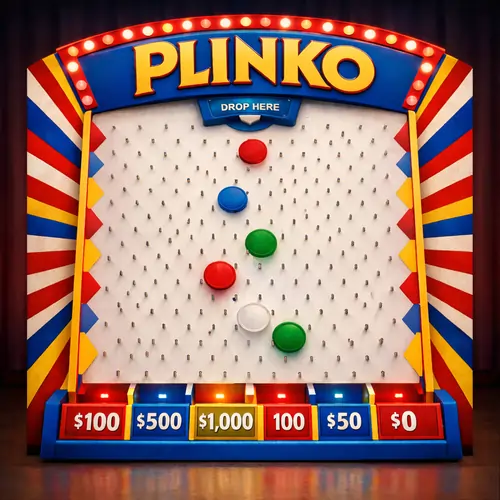
Plinko started as a TV game on The Price Is Right, with contestants dropping a puck from the top of a pegboard and watching it bounce into random prize slots. Online casinos have turned that same idea into an instant‑win casino title where you bet real money on each drop and the bottom pocket multiplier determines your payout.
For Asian players used to lottery draws, number games, and fast arcade titles, it feels familiar because it combines simple rules with suspense on every bounce. It also fits perfectly into quick mobile sessions, which is exactly how many players in the Philippines and Southeast Asia like to gamble online.
How It Works: Peg Board, Rows, and Multipliers
It is built around a vertical pegboard with a pyramid of pegs and a row of multiplier pockets at the bottom. You choose your bet size, select how many rows the board uses (commonly 8–16), choose a risk level (low, medium, or high), and then tap to drop the ball from the top.
As the ball bounces off each peg, it shifts left or right until it lands in one of the bottom pockets, each tied to a multiplier such as 0.2x, 1x, 3x, 9x, 18x or even up to 1,000x in some versions. The higher multipliers usually sit on the far left and right edges of the board, meaning they’re statistically much harder to hit than the center slots, which cluster around 0.5x–2x in many implementations.
Key mechanics players care about:
- Number of rows (lines): Typically 8–16; more rows mean more paths and more extreme multipliers at the edges.
- Risk modes: Low, medium, high risk, changing the distribution of multipliers rather than the basic rules.
- Bet control: Many games let you quickly adjust bet size, use auto‑play, or fire multiple balls at once for faster sessions.
This structure makes Plinko closer to a specialty instant‑win game than a slot, but it sits in the same category as Bingo, Mini Bingo, and Keno in terms of simplicity and pacing.
RNG, Fairness, and Why Plinko Is Pure Chance
Modern online Plinko titles do not simulate physics in real time; instead, they rely on Random Number Generators (RNGs) that decide the outcome at the moment you click. The bouncing ball you see is simply an animation showing the path that corresponds to the RNG outcome.
RNG‑certified games:
- Use audited algorithms that generate unpredictable and unbiased results for each drop.
- Ensure that previous drops do not influence future drops (no “hot” or “cold” boards).
- Often publish or at least internally maintain an RTP (Return to Player) range, usually somewhere around 95%–99% depending on the version.
To evaluate fairness, you should look for casinos that highlight “provably fair” Plinko in crypto environments, or at least show RNG certification and RTP information for real‑money versions. User tests with millions of simulated Plinko drops also tend to converge towards the advertised RTP, confirming that the edge is baked into the multiplier table and not manipulated mid‑game.
Betting Options and Features: Risk Levels, Auto‑Play, Multi‑Ball

Most serious casino games aimed at global and Asian markets share a common set of features.
Typical options include:
- Adjustable bet size: From micro stakes suitable for casual Philippine players up to high‑roller levels per ball.
- Risk level selector: Low, medium, high risk, clearly marked and often color‑coded.
- Row selector: 8, 10, 12, 14, or 16 rows that directly reshape the multiplier distribution.
- Auto‑play: Configure a set number of balls and auto stop conditions (loss limit, win target, etc.).
- Multi‑ball mode: Some versions allow multiple balls dropping almost simultaneously for rapid sessions.
RTP, Volatility, and Real Risk
RTP and volatility are where Plinko becomes more than just a “fun pegboard.” Many popular providers advertise RTPs in the 95%–99% range for their games, with some crypto‑oriented versions going as high as around 99%, which is rare for a real‑money casino title.
However, that high RTP does not mean you’ll experience smooth results in a short session:
- Low‑risk: Frequent small hits, more 0.8x–1.5x results, and fewer deep losses, ideal if you want to stretch a small bankroll.
- Medium‑risk: Mixed small and mid multipliers with occasional bigger spikes, similar to a medium‑volatility slot.
- High‑risk: Long stretches of 0.2x–0.5x hits or outright near‑losses, with rare shots at very high multipliers like 100x–1,000x depending on the game.
In practice, Plinko feels closer to a medium‑to‑high volatility game, especially if you select many rows and high risk, which concentrate huge multipliers at the edges. If you’re used to relatively steady results in Bingo or Lotto, prepare for sharper swings with Plinko.
Strategies and Bankroll Tips (No Guarantees)
Because Plinko is driven by RNG, there is no strategy that can guarantee wins or “force” big multipliers to drop. What you can do is manage your volatility exposure and protect your bankroll, especially if you’re playing from regions with lower average disposable income like the Philippines.
Practical tips that genuinely help:
- Decide your session budget up front and stick to it; Plinko is fast and can eat through funds quickly.
- Start in low‑risk mode with fewer rows to understand the feel of the multipliers before moving to high‑risk setups.
- Consider using auto‑play only when you have strict stop‑loss and stop‑win rules set.
- Treat high‑risk Plinko like a high‑volatility slot: a few big hits can define your session, but they are not guaranteed.
Mobile and User Experience
Most modern titles are built mobile‑first, with vertical layouts that look and feel good on mid‑range Android phones, which dominate in the Philippine and Southeast Asian markets. Buttons for risk level and rows are usually big, thumb‑friendly, and easy to tap, which matters when you’re playing on the go or with one hand.
Players in Asia often face fluctuating internet speeds, so instant‑win games like Plinko that use light animations and fast rounds are naturally attractive. Compared to more graphically heavy slots or live casino streams, Plinko loads quickly and can handle occasional lag without ruining the experience.
Plinko vs Other Arcade and Number Games on Asian iGaming
If you already enjoy number‑driven games on Asian iGaming, Plinko should sit in the same “quick‑hit” category as our other arcade titles.
Here’s how Plinko compares:
- Bingo and Mini Bingo: Card‑based draws where you chase patterns instead of multipliers; slower and more social.
- Keno, Lotto, and Number Game: Number‑selection games with single draws; good if you like picking specific numbers and waiting for results.
- Lucky Ball, Peg Drop, Drop Ball: Arcade‑style titles with similar “drop and land” mechanics, but sometimes with different payout grids or bonus twists.
- Crash Dice: Crash‑style multiplier game where you decide when to cash out; more interactive but also very volatile.
Bonuses, Wagering, and How Plinko Contributes
From a bonus‑clearing perspective, Plinko often falls into the same category as other instant‑win or “other games” in a casino’s game‑contribution table. Some casinos allow Plinko to contribute 100% towards wagering requirements, while others reduce its contribution or exclude it from bonus play due to the high RTP.
Before using Plinko to clear bonuses, always:
- Check the wagering requirement terms and game‑contribution rules on your chosen operator.
- Confirm whether instant‑win games and specialty titles are restricted or capped in their contribution.
Common Myths: Rigged or Legit?
Because Plinko feels physical and visual, many players think they can read patterns or that casinos “nudge” the ball away from big multipliers. In tested and certified RNG Plinko games, this is not the case; the multiplier is chosen by the algorithm the moment you click, and the board animation is just storytelling.
Common myths vs reality:
- “If I haven’t hit a big win in a while, I’m due”: Not true; each drop is independent.
- “Casinos slow down or rig Plinko when I increase my bet”: Certified RNGs are not allowed to react to bet size, only to random seeds.
- “There’s a secret trick to controlling the ball path”: In digital Plinko, you cannot aim or influence the path beyond starting the drop.
Testing Different Risk Levels and Tracking Results
For this review‑style framework, imagine a typical bankroll scenario that many Asian iGaming readers might relate to, such as a modest PHP‑denominated balance. Testing low, medium, and high risk gives you a narrative structure and supports NLP‑friendly phrases like “Plinko low‑risk experience,” “Plinko high‑risk volatility,” and “Plinko session results.”
In low‑risk mode with fewer rows:
- Balance decays slowly, with many 0.8x–1.5x results and occasional small upticks.
- Ideal for learning the game without emotional spikes.
In high‑risk mode with many rows:
- Long sequences of small multipliers can feel punishing, but the rare big hits create strong emotional peaks.
- This mode is closest to high‑volatility slots and crash‑style games in feel.
When Plinko Feels Fun vs When It Feels Too Volatile

From my perspective, Plinko is at its best when:
- You’re playing with a clearly defined budget and using low or medium risk.
- You treat it as a quick, fun break between rounds of Bingo, Lotto, or live‑dealer games.
It becomes “too much” when:
- You chase losses on high risk, trying to “force” a big multiplier.
- You rely on it as your main method of clearing bonuses without checking contribution rules.
How Plinko Fits with My Usual Games on Asian iGaming
If your usual rotation includes Bingo, Mini Bingo, Keno, and Number Game, Plinko is best treated as a side game rather than the only one you play. Its fast rounds and high‑RTP potential make it a good choice when you want quick results between lottery‑style draws or longer session games.
Compared with Crash Dice and other crash‑style titles, Plinko is less interactive but easier to understand at a glance, which is helpful if you’re new to casino games. That simplicity also works well for answer engines and voice search, where users just ask “How do I play Plinko?” and expect a short, clear response.
Pros and Cons of Plinko
Pros
- Simple rules and fast rounds.
- High potential RTP in some versions.
- Adjustable risk and rows to match different player profiles.
- Great mobile experience for on‑the‑go play in Asia.
Cons
- High‑risk setups can feel very volatile and punishing.
- No skill element; purely RNG with no influence on ball path.
- May be restricted or limited for bonus clearing at some casinos.
Should You Try It?
Plinko is an engaging, high‑RTP instant‑win game that suits Asian casino players who enjoy quick sessions and are comfortable with medium‑to‑high volatility. If you already love fast arcade‑style titles like Peg Drop, Drop Ball, or Lucky Ball, Plinko is worth adding to your rotation in low or medium risk first.
However, if you prefer slower, pattern‑based games like Bingo or number‑picking draws like Lotto, treat Plinko as a side game rather than your main focus. Whatever your style, play with a fixed budget, avoid chasing losses, and stick to licensed operators that clearly publish their RNG and RTP information for Plinko