
Walk into any casino in the Philippines or across Asia and you’ll spot one game that’s always buzzing with noise, laughter, and curious first‑timers: the Money Wheel. It looks simple, it sounds fun, and regulars will happily tell you it’s “just a bit of low‑stakes thrill.” What they rarely admit is how the odds really work, how your bankroll behaves in the long run, and why the house quietly loves this wheel so much.
This Money Wheel review breaks down what regular players don’t tell you, using plain language, real math, and practical tips tailored for casual players in Asia—especially if you’re visiting land‑based casinos in Manila, Cebu, or other gaming hubs. If you enjoy simple games like the Color Game review or fiesta‑style Perya Color Game review, this guide will help you decide whether Money Wheel deserves a spot in your casino night.
Hook & Quick Verdict
If you’re like most beginners, your first Money Wheel experience starts with a bright, colorful wheel, a friendly dealer, and the promise of turning a small bet into a big win in seconds. You put a few chips on a symbol that “feels lucky,” the dealer spins, everyone holds their breath, and when your segment hits, the whole table erupts in cheers. It feels like a party game, not a serious casino table.
Here’s the verdict most regulars won’t say out loud:
- Money Wheel is fun, loud, and perfect if you want a quick, social thrill and you accept you’re paying for entertainment, not profit.
- The house edge is high compared to games like blackjack or even roulette, so it’s a bad choice if you care about long‑term value or advantage play.
If your goal is to stretch a small bankroll and get decent odds, you’re usually better off at other games—or even alternative “wheel” games like a structured Lucky Wheel review or certain dice‑based arcade titles such as the Dice Roll review and Lucky Dice review.
What Is Money Wheel, Really?
At its core, Money Wheel (often grouped with Big Six Wheel) is a large vertical wheel divided into sections, each showing a number or symbol that corresponds to a payout on the table layout. You place chips on the symbol you think will land under the pointer; the dealer calls “no more bets,” spins the wheel, and if the pointer stops on your chosen section, you get paid according to the posted odds.
Typical casino Money Wheel layouts in Asia use multiple repeated symbols with different payout odds—common payout levels include even money, 3‑to‑1, 5‑to‑1, 10‑to‑1, 20‑to‑1, and up to around 47‑to‑1, depending on the local rules and number of sections. For a detailed look at how layouts and payouts can vary across casinos and regions, you can check the Big Six wheel overview and this practical gaming guide to the Big Six Wheel.
If you want a step‑by‑step walkthrough from a real casino, follow this how to play Money Wheel guide from Christchurch Casino. It explains how each symbol appears a different number of times, which is why the payouts and probabilities are not all equal.
The Part Regulars Won’t Explain Up Front
On the surface, regular players look like they’re just having harmless fun, but their actual relationship with Money Wheel is more complicated. Many experienced gamblers in Manila or Macau use it as a “time‑killer” game while waiting for a preferred table to open, or as a social side attraction when they’re with friends who don’t understand more complex games.
In many Asian casinos like those in Entertainment City, you’ll notice the Money Wheel doesn’t just spin—it performs. Some use a classic leather or plastic clacker that snaps over each peg, while others use a smoother, modern pointer or even electronic sensors with less physical contact. The sharp, rhythmic clacking is not an accident; that sound works almost like ASMR for gamblers, drawing attention, building suspense, and making every near‑miss feel painfully close even when the odds haven’t changed at all.
This multi‑sensory design—bright colors, loud spins, cheering crowds, and that hypnotic clacker—pulls your focus away from what really matters: the high built‑in house edge and the speed at which you’re placing bets. The wheel feels more “alive” than most table games, which is exactly why many casual players underestimate how quickly it can wear down their bankroll. If you’re familiar with social games like the Spin the Wheel review or live‑show titles from a Dream Catcher review, the emotional design is very similar.
Odds, Payouts, and the Hidden House Edge
This is where regulars get very quiet.
In a typical Money Wheel configuration, higher‑payout symbols appear fewer times on the wheel, while low‑payout symbols appear more often. That’s how the casino balances probability and payout. In some Entertainment City casinos, for example, the wheel is divided into 54 compartments with several different icons and payouts ranging from 1‑to‑1 up to 47‑to‑1.
Casinos in this region commonly quote a Money Wheel house edge around 11% on the standard bets, meaning that over time, the casino expects to earn about 11 units for every 100 units wagered. By comparison:
- Many Big Six wheels in Las Vegas or Atlantic City show house edges ranging roughly from 7% to well over 20%, depending on the bet.
- Standard American roulette sits around a 5.26% house edge, while European roulette is about 2.70%.
- Well‑ruled blackjack with basic strategy can offer a house edge close to 0.5–1%.
You can see these comparisons clearly in this house edge overview and a simple house edge guide for casual players. For a deeper look at how casinos stay profitable in general, check this explainer on how casinos ensure profit and house edge.
“Sucker” Bets on the Wheel
The highest‑payout segments—those promising 20‑to‑1, 47‑to‑1, or similar—often carry the worst house edge, because the true odds of landing them are much lower than what the payout justifies. Some Big Six style wheels show that rare 20‑to‑1 segments can have a house edge above 20%, making them some of the most expensive bets in the casino.
A detailed breakdown of how certain big‑payout wheel bets behave is illustrated in this Big Six wheel rules and odds guide. The pattern is simple: the bigger the payout, the higher the built‑in house advantage, a point reinforced by this Big Six wheel guide.
Common Myths Regular Players Spread
To keep the fun going, regular players often repeat a few myths around the Money Wheel.
“It’s due to land on X soon”
Many players believe that if a symbol hasn’t landed in a while, it is “due” to appear. In reality, each spin of the Money Wheel is independent: previous outcomes do not change the fundamental probability of the next result, assuming a fair wheel. This is a classic example of the gambler’s fallacy, explained in simple terms in this ELI5 house edge and probability discussion.
“Spreading bets gives you a real edge”
Another favorite strategy is to “cover the wheel” by betting on multiple segments at once, believing it lowers risk. In reality, spreading bets on a high‑edge game like Money Wheel does the opposite of what you want: it accelerates how fast you lose money. Because you’re increasing your total stake per spin, your overall “churn” (the total amount wagered per hour) goes up, and with an 11%+ house edge, the casino’s expected profit from your action rises just as quickly. Over enough spins, your average loss is driven by the house edge multiplied by how much you wager, not by how cleverly you spread your chips around.
“Lucky dealers and hot wheels”
Some regulars swear that certain dealers, angles, or “wheel moods” create streaks. Though manufacturing defects or severe imbalances can theoretically bias any mechanical game, regulated casinos track and maintain equipment to keep outcomes within fair tolerance; for everyday players, assuming a “hot wheel” offers no reliable advantage. Articles that unpack the science of the casino and why the house wins in the long run help put these myths into perspective.
What It Feels Like to Play Long‑Term
Short sessions can be memorable: you might hit a 20‑to‑1 symbol early and walk away feeling like Money Wheel is your lucky game. But if you track your bankroll over many visits—especially in popular casinos in Metro Manila or other Philippine gaming spots—you’ll likely see a pattern.
Long‑term Money Wheel play tends to look like this:
- Many small, frequent losses on low‑payout bets.
- Occasional mid‑range wins that bring you back near even.
- Rare big hits on high‑payout segments that temporarily put you ahead.
Emotionally, players cycle through excitement at the spin, frustration at near‑misses, and a slow erosion of funds that can be hard to notice in the buzz of the crowd. Regulars accept this because they treat the game as paid entertainment, not a profit opportunity, similar to how casual players treat arcade‑style betting games like the Color Game review or the fiesta‑style Perya Color Game review.
“Insider” Tips: How Smart Players Approach Money Wheel
If you still want to play Money Wheel, you can at least approach it like a smart recreational gambler.
Bankroll and expectations
Set a fixed budget for the wheel—money you are 100% comfortable losing, the same way you’d budget for a night out or a concert ticket. Because the house edge is high, your bankroll will usually drain faster than at better‑value games, so planning short sessions and strict walk‑away points is crucial. For a general understanding of how edge and game speed affect your bankroll, compare various games in this house edge comparison.
Safer bets versus lottery bets
While no Money Wheel bet is truly “good” from a value perspective, the lowest‑payout segments generally have the smallest house edge, because they appear more frequently. Higher‑payout segments function more like lottery tickets: tiny chance, big payout, very high built‑in casino advantage. A balanced approach for pure fun is to:
- Put most of your bet on a lower‑edge, low‑payout segment.
- Occasionally sprinkle a very small side bet on a big payout if you want that jackpot thrill.
If you want to explore different wheel and luck‑based formats outside of traditional tables, you can look at arcade‑style and live‑game‑show titles, such as those covered in a Fortune Wheel review or Dream Catcher review, where RTP and volatility can differ by provider.
Etiquette and when to walk away
Money Wheel tables are usually friendly and casual, but good etiquette helps you avoid mistakes—place bets before “no more bets” is called, don’t touch chips after the spin begins, and keep the mood light even when you lose. Most importantly, walk away when you hit your pre‑set loss limit or a nice win; chasing losses on a high‑edge game is one of the fastest routes to bankroll disaster.
If you want simple alternatives with similarly easy rules but different mechanics, you can explore games like the quick Dice Roll review, probability‑driven Hi‑Lo review, or the luck‑centric Lucky Dice review.
When Money Wheel Is a Terrible Idea
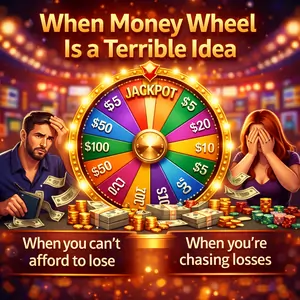
There are moments when even casual players should avoid the Money Wheel entirely.
- When you’re already tilted and chasing losses from other tables, a high‑edge, fast‑spin game is the worst possible choice.
- When your bankroll is very small and you want to maximize playing time, you’ll get better longevity from lower‑edge games or slower‑paced options.
- When you’re tired, intoxicated, or emotionally stressed, the constant stimulus and quick decisions can push you into impulsive betting.
Advantage players and serious gamblers mostly ignore Money Wheel because it offers no realistic way to overcome the house edge through skill or card counting; it’s closer in spirit to a carnival game than to blackjack, poker, or well‑structured sports betting markets. If you want wheel‑based action with more structure, live game‑show style titles such as those reviewed in a Dream Catcher review, Spin the Wheel review, or Fortune Wheel review might scratch the same itch with different RTP profiles depending on the provider.
When It Can Still Be Fun and “Worth It”
Despite the math, there are ways Money Wheel can be “worth it” if you define value as entertainment, not return on investment. If you set a strict budget, treat any money on the wheel as the cost of a show, and enjoy the social vibe, then a short session can be a fun part of a night out in Metro Manila or other Asian casino destinations.
Use Money Wheel the way you’d use a lottery or casual bingo game: a low‑information, high‑fun break from more mentally demanding titles. Some players alternate between Money Wheel and simpler arcade‑style games like the fast‑paced online Money Wheel review in digital form, or casual number games like an online Bingo review, to keep things light without pretending they’re grinding an edge.
Final Verdict: Should You Play Money Wheel?
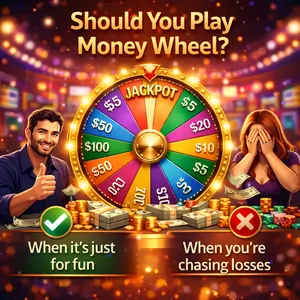
Here’s the honest bottom line that many regulars gloss over:
- Money Wheel is ideal for beginners and casual players who want a loud, simple, social game and are okay losing their stake as the price of fun.
- It is a poor choice for players who care about odds, expected value, or building a long‑term gambling strategy, because the house edge is significantly higher than many other mainstream games.
If you decide to play, keep your sessions short, your bets modest, and your mindset focused on entertainment, not profit. If you care more about value, learn games with lower house edge and clearer strategy—using resources like this house edge of casino games compared and this overview of casino games with the best odds—or explore alternative arcade and wheel‑style titles where rules and return percentages are more transparent, using guides like the Color Game review, Lucky Wheel review, and Money Wheel review.
